















Top Universities & Colleges

Click the "LOGO" -> Free Profile Evaluation & "Name"-> for Know more about Institution

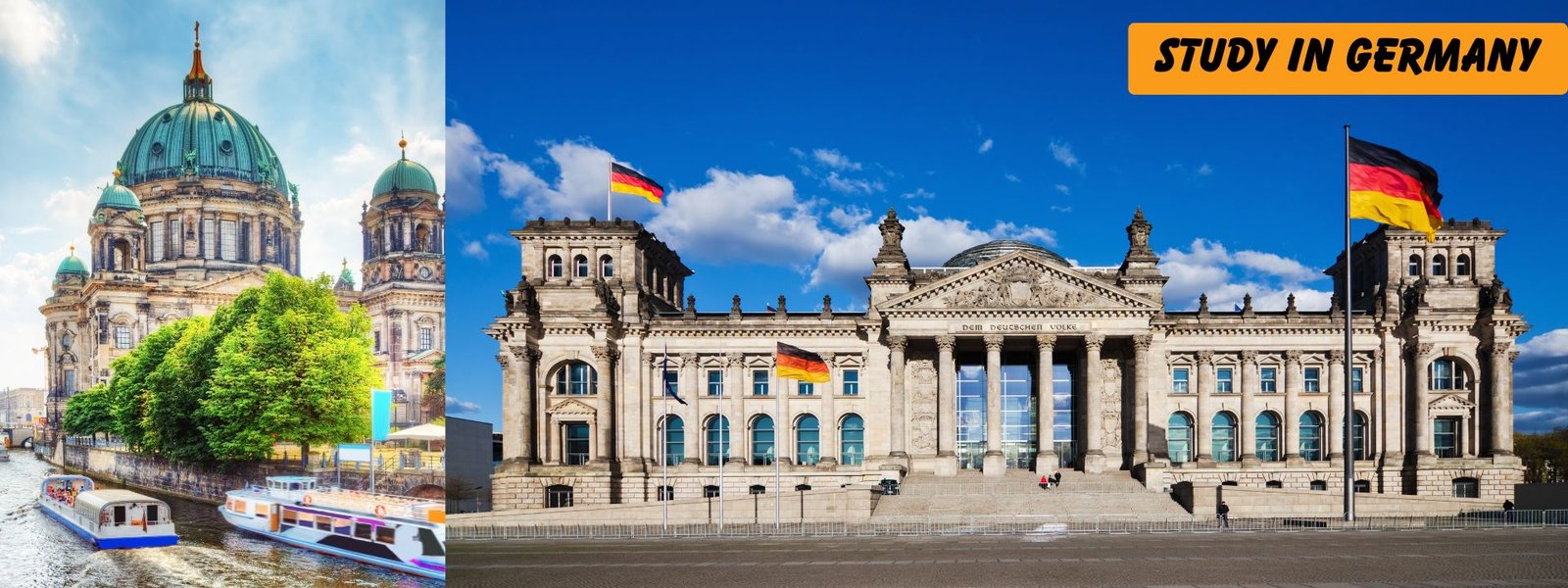
STUDY IN GERMANY

Complete Guide for International Students (2026–2027)

Introduction to GERMANY

Germany is one of the world’s most popular study destinations, attracting over 400,000 international students every year. Renowned for its world-class universities, affordable education, cutting-edge research, and strong economy, Germany offers outstanding academic and career opportunities for students from across the globe.As a member of the European Union (EU) and the Schengen Area, Germany provides internationally recognized degrees, excellent employment prospects, and access to the European job market. The country is especially known for Engineering, Computer Science, Business, Data Science, Artificial Intelligence, Healthcare, and Automotive Technology.With a wide range of English-taught Bachelor’s and Master’s programs, low or no tuition fees at many public universities, and excellent post-study work opportunities, Germany remains one of the best destinations for international education.

Why Study in GERMANY?

Germany offers an excellent combination of quality education, affordable living, and international career opportunities.

Top Reasons to Choose Germany

  • World-renowned universities
  • Low or no tuition fees at many public universities
  • Globally recognized degrees
  • Strong economy and job market
  • Excellent research facilities
  • English-taught programs
  • Post-study work opportunities
  • Safe and multicultural environment
  • Gateway to careers across Europe
GERMANY PIC 2

What makes Germany best for students?

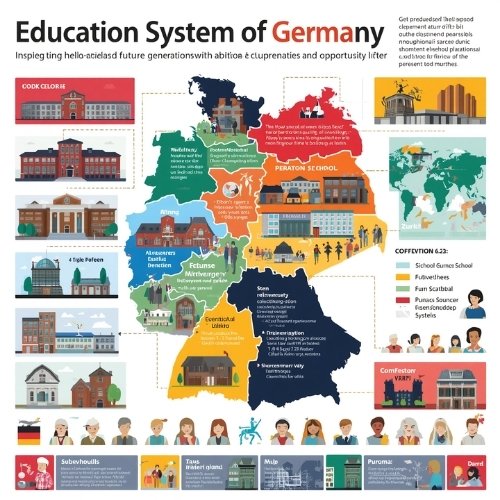
            Education System

Germany follows the Bologna Process, ensuring internationally recognized qualifications.

   Types of Institutions

  • Public Universities
  • Universities of Applied Sciences (Fachhochschulen)
  • Private Universities

   Degree Structure

     Degree

Duration

     Bachelor’s

3–4 Years

     Master’s

1–2 Years

     PhD

3–5 Years

Popular Courses

    • Mechanical Engineering
    • Automotive Engineering
    • Civil Engineering
    • Computer Science
    • Artificial Intelligence
    • Data Science
    • Cybersecurity
    • Business Administration
    • MBA
    • Finance
    • Biotechnology
    • Renewable Energy
    • Medicine
    • Pharmacy
    • Architecture
    • Robotics
    • Logistics
    • Supply Chain Management

Admission Requirements

Bachelor’s

  • 12th Grade Certificate (or recognized equivalent/foundation pathway where applicable)
  • Valid Passport
  • English or German language proficiency
  • Statement of Purpose (if required)

Master’s

  • Bachelor’s Degree
  • Academic Transcripts
  • CV/Resume
  • Statement of Purpose
  • Letters of Recommendation (if required)

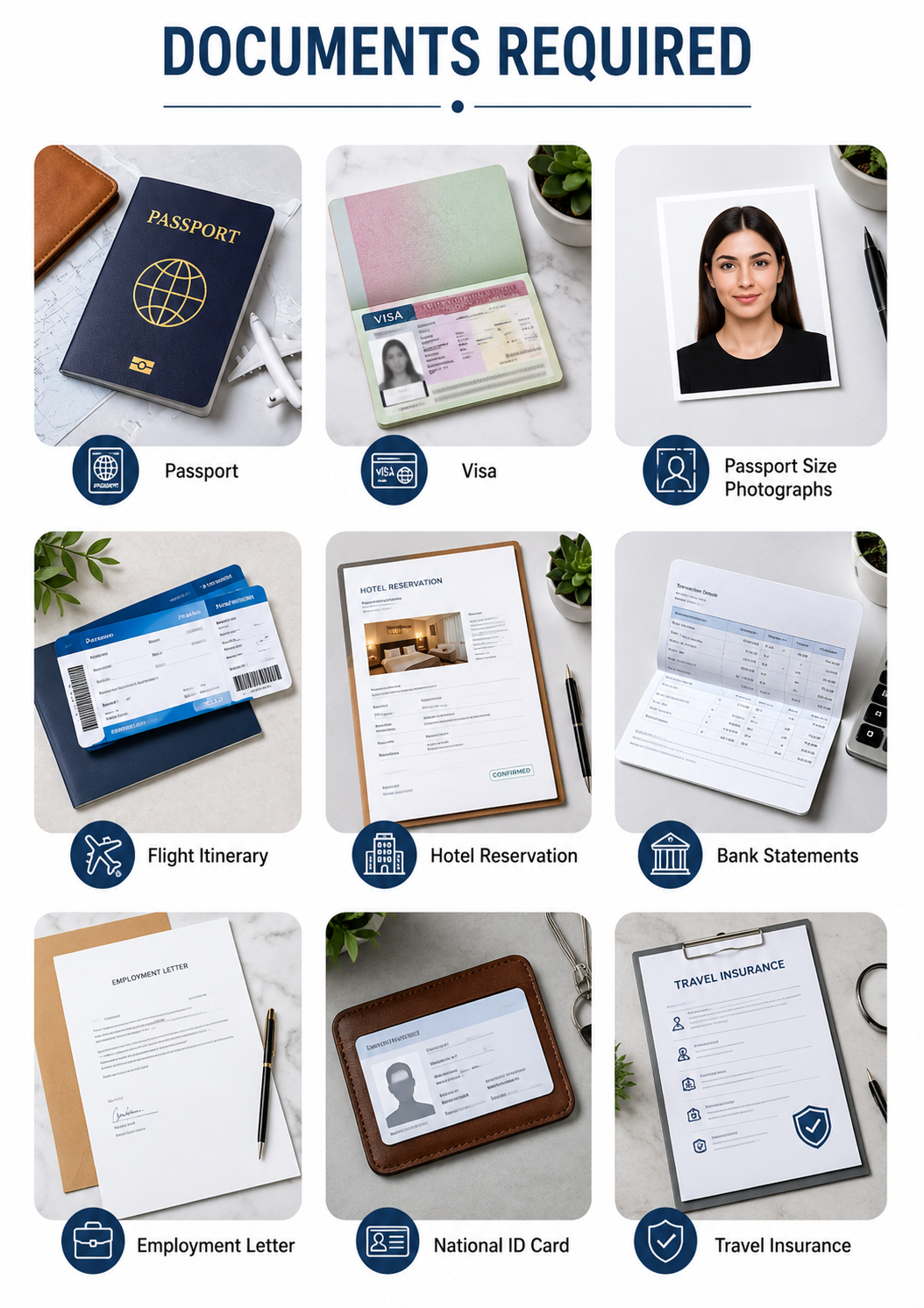
Required Documents

 Students generally need :

  • Valid Passport
  • Passport-size Photographs
  • Academic Certificates
  • Academic Transcripts
  • Statement of Purpose (SOP)
  • Updated CV/Resume
  • Letters of Recommendation (if applicable)
  • IELTS/PTE/TOEFL Score 
  • Financial Documents
  • Health Insurance

Scholarship

English Language Requirements

Accepted English proficiency tests include:

  • IELTS: 6.0–6.5
  • TOEFL iBT
  • PTE Academic
  • Duolingo (accepted by selected universities)
  • Medium of Instruction (MOI) accepted by some universities

German-taught programs generally require German language proficiency (e.g., TestDaF, DSH, or equivalent).

Scholarship

International students can apply for:

  • DAAD Scholarships
  • Deutschlandstipendium
  • Erasmus+
  • University Merit Scholarships
  • Foundation Scholarships

Scholarships may cover tuition, monthly stipends, research funding, or living expenses, depending on the program.

Germany Student Visa

Students from non-EU/EEA countries generally require a German National Student Visa for long-term studies.

Required Documents

  • Valid Passport
  • Admission Letter
  • Visa Application Form
  • Passport-size Photos
  • Proof of Funds (Blocked Account or accepted alternative)
  • Health Insurance
  • Accommodation Details (if available)
  • Academic Documents
Visa Processing Time: 4–12 weeks
 

Financial Requirements

Students usually need to show sufficient funds to cover living expenses, commonly through a Blocked Account or another accepted financial proof, as per current regulations.

Accepted financial documents may include:

  • Blocked Account
  • Scholarship Letter

Career Opportunities

Germany has strong demand for skilled professionals in:

  • Engineering
  • Information Technology
  • Artificial Intelligence
  • Data Science
  • Healthcare
  • Finance
  • Automotive
  • Manufacturing
  • Renewable Energy
  • Logistics

Average graduate salary:

€45,000–€65,000 per year, depending on the industry, experience, and location.

Part-Time Work Opportunities for Students

International students can generally work:

140 full days or 280 half days per year, in line with current regulations.

Average hourly wage:   €12–€18 per hour

Popular jobs include:

  • Research Assistant
  • Teaching Assistant
  • Retail
  • Hospitality
  • Warehouse
  • Customer Service
  • IT Support
  • Software Development

International Students Life in Germany

Malta offers an enjoyable and multicultural student experience with a blend of academic excellence and Mediterranean lifestyle.

Students enjoy:
  • Beautiful beaches and coastal attractions
  • Modern campuses
  • Student clubs and societies
  • International cultural events
  • Safe and welcoming communities
  • Sports and recreational activities
  • Historic UNESCO World Heritage Sites
  • Easy travel across Europe

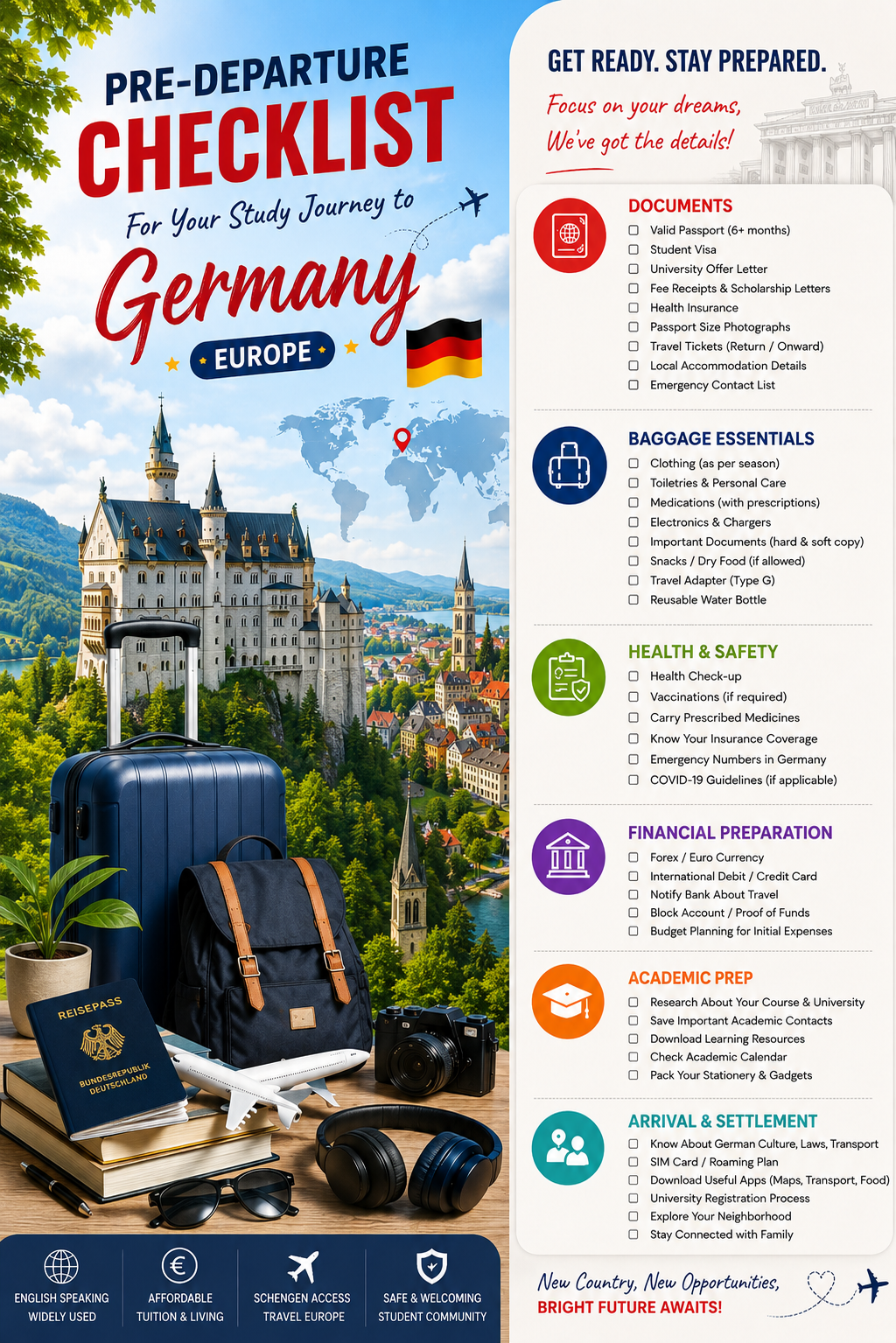
Pre-Departure Checklist

Before travelling, ensure you have:

✅ Valid Passport

✅ Germany Student Visa

✅ University Offer Letter

✅ Tuition Fee Receipt

✅ Accommodation Confirmation

✅ Flight Ticket

✅ Health Insurance

✅ Academic Documents

✅ Financial Documents

✅ Emergency Contact Details

Step-by-Step Admission Process

Frequently Asked Questions For Germany

Step 1

Choose your preferred institution and course.

Step 2

Review the admission requirements.

Step 3

Prepare academic and supporting documents.

Step 4

Submit your application.

Step 5

Receive the Offer Letter.

Step 6

Pay the required tuition fee deposit.

Step 7

Apply for the Malta Student Visa (Type D).

Step 8

Arrange accommodation and health insurance.

Step 9

Book your flight.

Step 10

Travel to Malta and complete your institution’s registration process.

Is Germany good for international students?

 Yes, Germany offers world-class education, affordable public universities, and excellent career opportunities.

Not always. Some universities accept an MOI certificate or other English proficiency evidence.

Yes. Eligible students can work 140 full days or 280 half days per year.

Many public universities charge no tuition fees, though semester contributions apply. Private universities have higher fees.

The Average Living Cost in Germany for International Students is Around €900–€1,300 per month.

 The October (Winter) intake offers the widest range of programs.

 Yes, including DAAD, Deutschlandstipendium, Erasmus+, and university scholarships.

 Yes, eligible graduates can apply for an 18-month post-study residence permit.

Yes, Germany is considered one of the safest countries in Europe.

Official Resources

Play sound