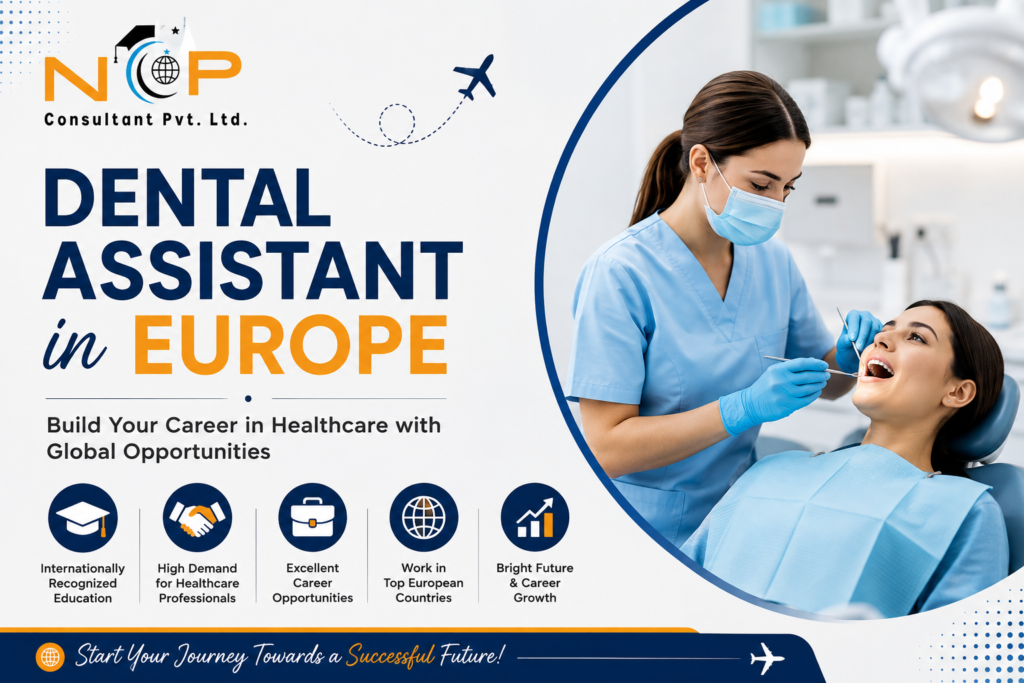
The healthcare industry in Europe is experiencing a growing demand for skilled professionals, and Dental Assistants are among the most sought-after roles. As dental clinics, hospitals, and private practices expand across Europe, the need for qualified dental support staff continues to rise.
For Indian students looking to build an international healthcare career without spending many years studying dentistry, becoming a Dental Assistant in Europe can be an excellent option. This profession offers practical training, good salaries, international exposure, and long-term career growth.
In this complete guide, you’ll learn everything—from eligibility and admission to visa requirements, job opportunities, salaries, and career progression.
What is a Dental Assistant?
A Dental Assistant is a healthcare professional who supports dentists during patient treatment and helps ensure the smooth operation of a dental clinic.
Dental Assistants perform both clinical and administrative duties.
Their responsibilities include:
- Preparing treatment rooms
- Sterilizing dental instruments
- Assisting during dental procedures
- Taking patient medical history
- Managing appointments
- Preparing dental materials
- Educating patients about oral hygiene
- Maintaining patient records
- Supporting infection control procedures
Unlike dentists, Dental Assistants do not diagnose or independently perform complex dental procedures unless permitted by local regulations.
Why Choose Europe for Dental Assistant Studies?
Europe has become a preferred destination because of:
- Affordable education
- Internationally recognized qualifications
- Modern dental laboratories
- Practical clinical training
- Growing healthcare demand
- Safe learning environment
- Excellent work opportunities
- Pathways to permanent residency in some countries
- Multicultural exposure
Top European Countries for Dental Assistant Courses
Some of the best destinations include:
- Malta
- Germany
- Ireland
- Finland
- Sweden
- Denmark
- Netherlands
- Poland
- Hungary
- Spain
- Portugal
- Austria
- Czech Republic
Each country has different language requirements, licensing rules, and employment regulations.
Who Can Apply?
Students who have completed:
- Class 12 (Science preferred)
- Biology background (preferred but not always mandatory)
- Healthcare-related diploma
- Dental Hygienist qualification
- BDS graduates looking for international opportunities
- Healthcare professionals seeking career advancement
Eligibility Requirements
Most institutions require:
- 10+2 qualification
- English proficiency (IELTS/PTE/MOI where accepted)
- Passport
- Medical fitness
- Police Clearance Certificate (if required)
- Motivation Letter
- Academic transcripts
Requirements vary depending on the institution and country.
Course Duration
Dental Assistant programs typically range from:
- Certificate: 6–12 months
- Diploma: 1–2 years
- Advanced Diploma: Up to 2 years
Many programs include mandatory clinical internships.
Subjects You’ll Study
Common modules include:
- Dental Anatomy
- Oral Biology
- Infection Control
- Chairside Assisting
- Dental Radiography (where permitted)
- Sterilization Procedures
- Dental Materials
- Medical Emergencies
- Patient Communication
- Clinical Practice
- Practice Management
- Oral Health Education
Practical Training
Practical learning is a major part of Dental Assistant education.
Students gain experience in:
- Dental hospitals
- Private clinics
- University dental centers
- Community healthcare facilities
Hands-on clinical training prepares students for real-world practice.
Admission Process
Step 1
Choose a recognized institution.
Step 2
Submit your application.
Step 3
Upload academic documents.
Step 4
Meet English language requirements (if applicable).
Step 5
Receive the Offer Letter.
Step 6
Pay the required tuition deposit.
Step 7
Receive admission confirmation.
Step 8
Apply for your student visa.
Student Visa Process
Generally, you’ll need:
- Valid passport
- Offer/Acceptance Letter
- Proof of tuition payment (if required)
- Financial evidence
- Health insurance
- Accommodation details
- Visa application form
- Passport photographs
- Medical documents (where applicable)
Always check the official immigration requirements for your destination country before applying.
Cost of Studying
Costs vary depending on the country and institution.
You should budget for:
- Tuition fees
- Accommodation
- Food
- Transportation
- Health insurance
- Visa fees
- Study materials
- Personal expenses
Scholarships may be available through universities or government programs.
Can International Students Work While Studying?
In many European countries, international students are allowed to work part-time during their studies, subject to local immigration regulations.
Part-time work can help students gain experience and support living expenses.
Job Opportunities After Graduation
Qualified Dental Assistants may find employment in:
- Private dental clinics
- Multi-specialty hospitals
- Cosmetic dental centers
- Orthodontic clinics
- Pediatric dental clinics
- Oral surgery centers
- Dental laboratories
- Community healthcare services
- University dental hospitals
Career Progression
With experience, Dental Assistants may advance to roles such as:
- Senior Dental Assistant
- Lead Clinical Assistant
- Dental Practice Coordinator
- Orthodontic Assistant
- Oral Surgery Assistant
- Dental Reception Manager
- Sterilization Supervisor
- Dental Clinic Administrator
- Dental Treatment Coordinator
Some professionals pursue further education to become Dental Hygienists or Dentists, depending on the country’s recognition and licensing pathways.
Average Salary in Europe
Salaries vary based on:
- Country
- Experience
- Qualifications
- Employer
- Language skills
- Location
Generally, experienced Dental Assistants earn more than entry-level professionals. In many countries, additional certifications and local language proficiency can significantly improve career prospects.
Skills Required
Successful Dental Assistants typically possess:
- Communication skills
- Attention to detail
- Teamwork
- Patient care
- Manual dexterity
- Time management
- Infection control awareness
- Computer literacy
- Professional ethics
Is Local Language Required?
English may be sufficient for study in many international programs. However, for employment and direct patient interaction, employers in several European countries prefer or require proficiency in the local language (such as German, Dutch, or Swedish).
Learning the local language can improve job opportunities and integration.
Can Indian BDS Graduates Work as Dental Assistants?
Many Indian BDS graduates consider Dental Assistant roles while pursuing registration or additional qualifications abroad. Opportunities and legal requirements vary by country, so it’s important to verify local licensing rules before accepting employment.
Advantages of Becoming a Dental Assistant in Europe
- International work experience
- High-quality clinical exposure
- Modern healthcare environment
- Career advancement opportunities
- Stable demand in the healthcare sector
- Opportunity to work with advanced dental technology
- Professional networking
- Potential pathways to long-term residence in some countries
Challenges to Consider
- Language barriers in some countries
- Different licensing requirements
- Cost of living
- Competition in major cities
- Adapting to new healthcare systems
Planning ahead and researching country-specific requirements can help overcome these challenges.
Frequently Asked Questions (FAQs)
Is NEET required?
Generally, NEET is not required for Dental Assistant certificate or diploma programs. However, individual institutions may have their own admission criteria.
Can Arts students apply?
Some programs may accept students from non-science backgrounds, but science subjects are often preferred. Check the specific requirements of your chosen institution.
Can I stay in Europe after graduation?
Many European countries offer post-study work or residence options, subject to their immigration policies.
Is there demand for Dental Assistants?
Yes. The healthcare sector in many European countries continues to seek qualified dental support professionals due to aging populations, increased oral healthcare awareness, and expanding dental services.
Why Choose NCP Consultant?
At NCP Consultant, we help aspiring healthcare students achieve their international education goals with comprehensive support, including:
- Career counseling
- University selection
- Admission assistance
- Documentation guidance
- Scholarship support
- Student visa assistance
- Interview preparation
- Pre-departure guidance
Final Thoughts
A career as a Dental Assistant in Europe offers a practical entry into the international healthcare industry. With growing demand, modern training, and opportunities for professional development, it is an attractive option for Indian students who want to build a global career in dentistry and patient care.
Success begins with choosing the right course, understanding country-specific requirements, and preparing your application carefully. With the right guidance and commitment, you can take the first step toward a rewarding healthcare career in Europe.