Study in Europe – Comprehensive Guide
🌍 Why Study in Europe? — Key Benefits
Studying in Europe offers world-class education, cultural diversity, global exposure, and international career opportunities. Europe is home to top-ranked universities with degrees recognized worldwide, making it a preferred destination for students seeking academic excellence and future success .
🎓 Academic Advantages
- Globally recognized degrees that boost employability worldwide.
- Wide range of programs across fields — from engineering and business to arts, sciences, medicine, and research.
- English-taught courses abundant in many countries, reducing the language barrier for international students.
💼 Career & Work Benefits
- Part-time work rights during studies to gain practical experience and supplement living expenses.
- Post-study work visas allow graduates to stay and search for jobs (typically 1–2 years depending on the country).
- Access to EU job markets & internships increasing career mobility.
💰 Affordability & Scholarships
- Many public universities offer low or no tuition fees, especially in countries like Germany and Norway.
- Scholarships such as Erasmus+, national government grants, and university funds are widely available.
🌐 Cultural & Personal Growth
- Experience diverse cultures and languages, broadening worldviews and global competencies.
Travel opportunities across Schengen countries with efficient transport and budget options.
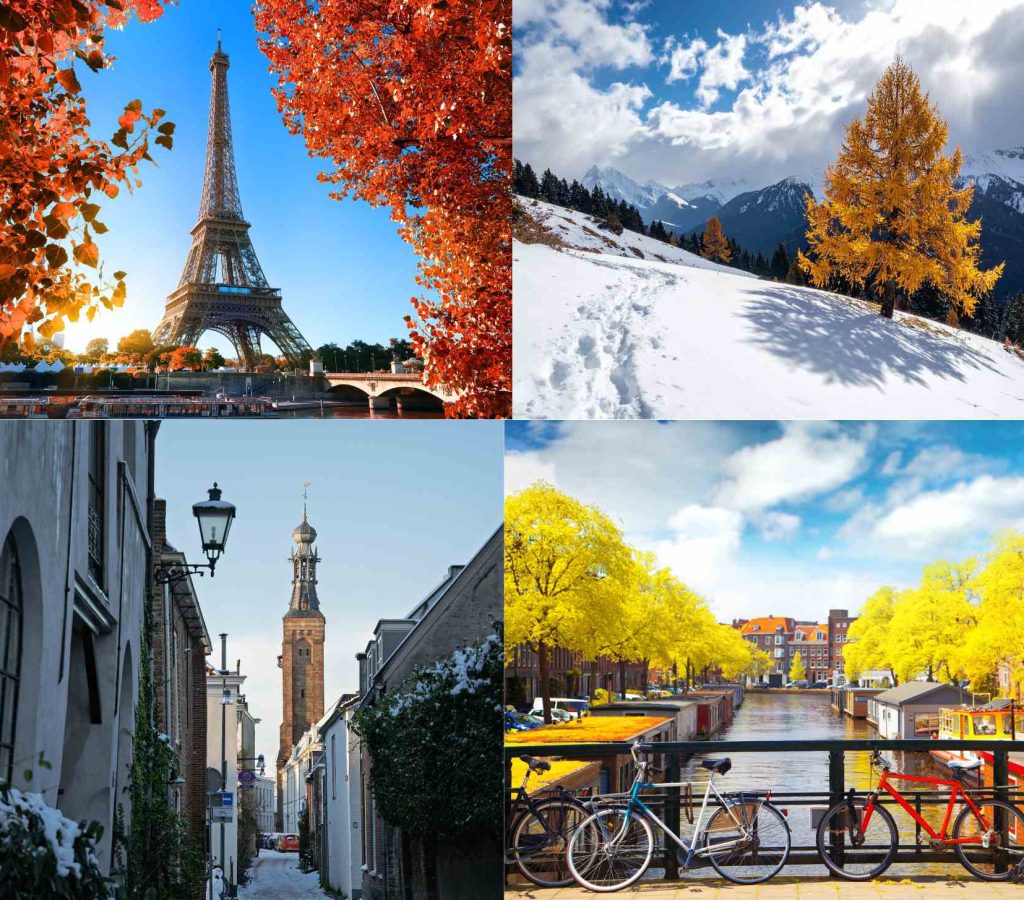
📅 Seasons in Europe – What to Expect
Europe’s climate varies by region. Use this when planning arrival dates, academic year or travel.
Spring (Mar–May): Mild weather across most of Europe; blossoms and fewer tourists—good for arriving before semester start. (Best for northern & central Europe.) Wikipedia
Summer (Jun–Aug): Warm to hot in southern Europe (Mediterranean), pleasant in the north; peak tourist season (higher costs). Good for summer courses/internships. Expat Explore+1
Autumn / Fall (Sep–Nov): Cooler temperatures, colourful landscapes; another “shoulder” season with fewer crowds—many university terms begin in September/October. Rick Steves
Winter (Dec–Feb): Cold and shorter daylight in northern/central Europe; milder in southern coastal areas. Useful to factor heating costs and travel conditions into budgets. Wikipedia
Regional note: Southern Europe (Spain, Italy, Greece) has a Mediterranean climate (hot, dry summers, mild winters). Northern/Central Europe is more oceanic/continental—cooler and wetter.
🎉 Important Festivals & Student Events in Europe
Europe’s rich cultural calendar adds immense value to student life.
Must-Know Festivals
International Student Festival in Trondheim (Norway): One of the world’s largest student festivals focusing on culture and community.
Bilbao Festival of Theatre Schools (Spain): A major theatre arts festival celebrating university productions.
InterHarmony International Music Festival (Germany/Italy): A prestigious summer music festival for young musicians.
Music Fest Perugia (Italy): International summer classical music event with intensive workshops and performances.
Greifswald International Students’ Festival (Germany): Student-led event that includes cultural programs and workshops.
Plus: Local seasonal cultural celebrations (e.g., Oktoberfest in Germany, Carnival in Italy/Spain, Christmas markets across Europe) significantly enrich student life.
🛂 Student Visa Types & When They Apply
To study in Europe, you’ll need a student visa or residence permit depending on your destination and program length:
✈️ Schengen Student Visa
- Short-term stay (up to 90 days).
- Typically used for language courses or short study programs.
- Not valid for full-degree programs.
📚 Long-Stay Student Visa & Residence Permit
- Required for degree programs longer than 90 days.
- Issued by specific country embassies/consulates.
- Converts to a residence permit allowing stay for full course duration.
👨🎓 Post-Study Work & Residency Visas
After graduation, many European countries provide stay-back options:
- Germany: Up to 18-month job-seeker visa.
- Netherlands: 12-month orientation year visa.
- France: APS job search visa (up to 24 months).
- Ireland/Spain/Sweden: Extend stays for job hunting (varies by country).
These pathways often serve as stepping stones toward permanent residency or EU Blue Card options
📍 Typical Step-by-Step Student Visa Process
Here’s a simplified process most European student visas follow:
- University Application & Acceptance: Receive an offer letter.
- Prepare Required Documents: Passport, financial proof, health insurance, accommodation evidence, language certificates (if needed).
- Apply for Visa: Submit application at embassy/consulate or via official portal.
- Biometrics/Interview: Attend interview and biometric submission.
- Approval & Residence Permit: Receive visa and register for a residence permit upon arrival if needed.
Travel & Enrollment: Book travel, attend university orientation, and complete local registrations.
Country-Specific Highlights & Norms
Country | Known For | Student Life Norms |
Germany | Tuition-free public universities, strong engineering & IT sectors | Part-time work allowed; great research infrastructure |
France | Arts, business schools, culinary arts | Rich cultural events; post-study APS visa options |
Netherlands | English-taught programs across disciplines | Highly international campuses; strong research focus |
Spain | Affordable living, vibrant culture | Festivals & language immersion; work-life balance |
Italy | Historic universities, design & humanities | Blend of tradition & modern research |
🧑🎓 Post-Study Work & Residency Pathways
After completing your degree:
✅ Work & Career Launch
- Post-study job search visas allow graduates to work and explore career paths within Europe.
- Graduates often find opportunities in IT, healthcare, engineering, finance, sustainable tech, and research sectors.
🏠 Residency & Long-Term Settlement
- Many European nations offer permanent residency routes if you secure employment and maintain a legal work status for several years.
EU-wide initiatives (like the EU Blue Card) support long-term skilled work residence and mobility across member states.
🧭 Travel & Tourism in Europe (study + explore)
Students can explore historic capitals, natural landscapes, and UNESCO sites:
- Paris (France): Eiffel Tower, museums.
- Rome (Italy): Ancient ruins.
- Amsterdam (Netherlands): Canals and museums.
- Swiss Alps: Adventure and scenic beauty.
With railway networks, backpacks, and budget flights, weekend trips become memorable parts of student life
💼 Important Industries in Europe for Work (European job sectors)
Europe’s job market thrives in multiple sectors:
🖥️ Technology & IT
Cities like Berlin, Amsterdam and Stockholm have growing tech hubs.
🏭 Engineering & Manufacturing
Powerhouses in automotive and renewable energy.
🧪 Healthcare & Biotech
Strong pharmaceutical clusters.
💶 Finance & Banking
Major centres in London, Frankfurt and Zurich.
🎨 Creative & Tourism Sectors
Fashion, design, hospitality, and Europe’s tourism ecosystem offer diverse careers.
✈️ Conclusion: Why Europe is the Ultimate Global Study Destination
Studying in Europe offers international students a unique blend of world-class education, affordable tuition costs, cultural diversity, work opportunities, and long-term career growth—all within one region. Europe is home to some of the world’s oldest and most prestigious universities, offering globally recognized degrees, research-driven learning, and industry-aligned programs. Students who choose to study in Europe benefit from high academic standards, innovative teaching methods, and exposure to global best practices.
One of the major advantages of studying in Europe is its cost-effective education system, with many European countries offering low or no tuition fees, scholarships, and affordable living options compared to other popular study destinations. International students can also work part-time during studies and gain valuable international work experience, strengthening their employability after graduation. Several European countries provide post-study work visas and long-term residence pathways, making Europe an excellent choice for students planning global careers.
Europe’s rich cultural diversity and travel opportunities further enhance the student experience. With easy access to multiple countries, languages, and cultures, students enjoy unmatched international exposure. Strong visa support systems, student-friendly immigration policies, and a stable socio-economic environment make Europe a safe and future-focused destination. Whether your goal is academic excellence, global career mobility, or international exposure, studying in Europe equips you with the skills, confidence, and opportunities needed for long-term success.
Key Benefits of Studying in Europe
Study in Europe at top-ranked and globally recognized universities
High-quality education with research and industry-focused programs
Affordable tuition fees and cost-effective living options
Access to scholarships and financial support
Opportunity to work part-time during studies
Post-study work opportunities and residency pathways in many European countries
Rich cultural diversity with exposure to multiple languages and traditions
Easy travel across European countries with student visas
Strong career prospects with global employability
Safe, student-friendly environment with structured visa systems
📌 Final Takeaway
Studying in Europe delivers a powerful combination of academic excellence, cultural enrichment, global career growth, and personal development. Backed by strong visa support systems and pathways to long-term opportunities, Europe remains one of the most trusted and rewarding study abroad destinations for international students worldwide.